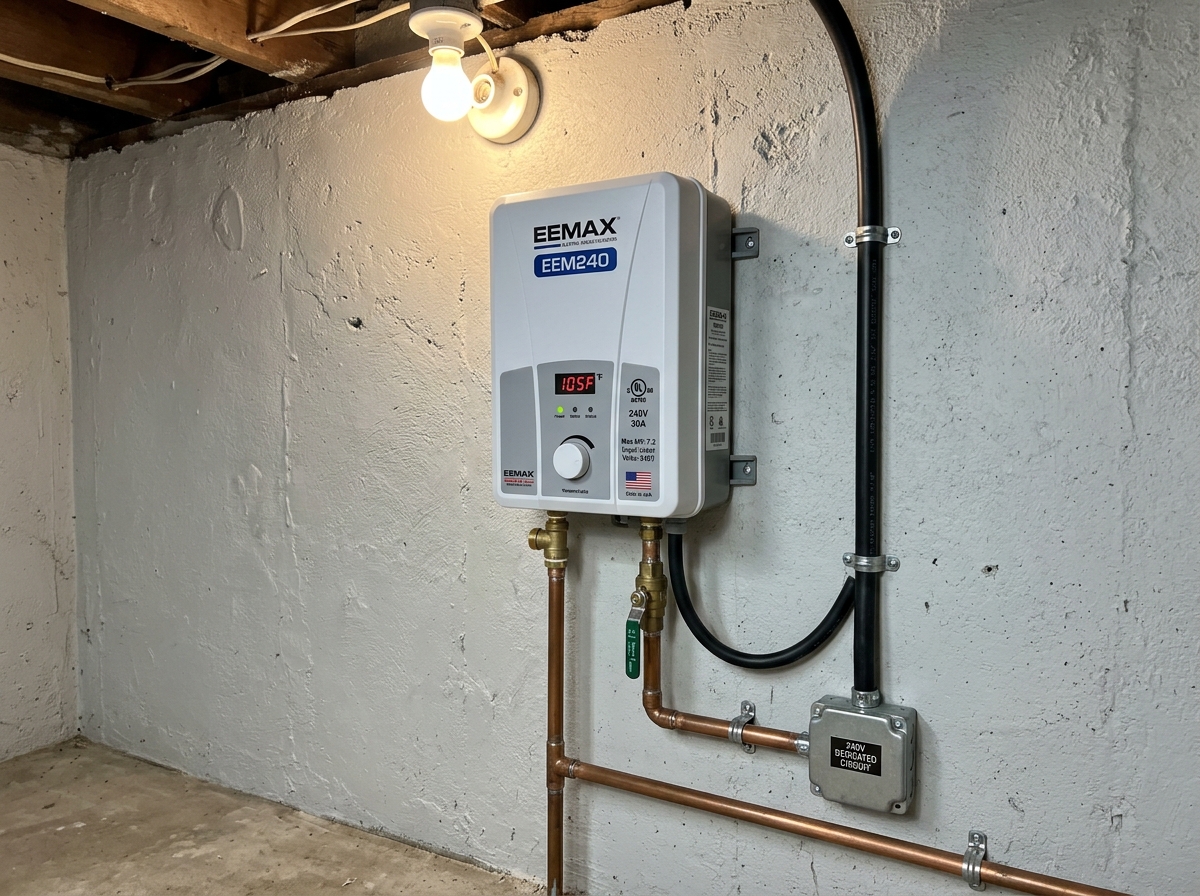
Best Whole-House Electric Tankless Water Heater 2026: 240V Models That Actually Work
Affiliate Disclosure: TanklessGeek participates in the Amazon Services LLC Associates Program. We earn commissions from qualifying purchases through our Amazon links at no extra cost to you. We recommend products based on specifications, performance, and value, not commission rates.
Quick Picks: Best 240V Whole-House Electric Tankless 2026
All four ASINs verified live on Amazon as of September 2026. GPM figures are warm-climate maximums (70 degrees F inlet). Cold climates will see 30-50% lower output - see the climate zone guide below.
| Model | kW | Max GPM (warm) | Approx. Price | Best For |
|---|---|---|---|---|
| Stiebel Eltron Tempra 36 Plus | 36 kW | 7.0 GPM | ~$769 | Best overall - cold and moderate climates |
| Rheem RTEX-36 | 36 kW | 8.8 GPM | ~$770 | Best value 36 kW - warm climates, high flow |
| EcoSmart ECO 36 | 36 kW | 8.7 GPM | ~$561 | Best price - warm climates only, lifetime warranty |
| Rheem RTEX-24 | 24 kW | 5.9 GPM | ~$519 | Warmer climates, 2-bath homes, easier panel fit |
The Electric Tankless Reality Check
Every manufacturer publishes generous GPM figures. Those numbers assume inlet water at 65-77 degrees F - conditions that apply to Florida, Texas, Southern California, and similar warm markets. In Michigan, Minnesota, or Colorado in January, groundwater enters at 40-50 degrees F. That temperature gap requires more energy per gallon, and since the heater is capped at its rated kW, flow rate drops to compensate.
The math is straightforward. To raise water temperature by a given amount at a given flow rate, you need a fixed number of BTUs. At 36 kW (122,800 BTU/hr), the performance table looks like this:
| Inlet Temp | Target Output Temp | Temp Rise Needed | Max GPM at 36 kW | Typical Region |
|---|---|---|---|---|
| 70 degrees F | 120 degrees F | 50 degrees F | ~7-8 GPM | Florida, Gulf Coast, Southern CA |
| 60 degrees F | 120 degrees F | 60 degrees F | ~6 GPM | Mid-Atlantic, Pacific Northwest, Texas |
| 50 degrees F | 120 degrees F | 70 degrees F | ~5 GPM | Midwest, New England (spring/fall) |
| 40 degrees F | 120 degrees F | 80 degrees F | ~4 GPM | Northern US, mountain regions (winter) |
Four GPM in winter means one shower at a time - barely. For a 2-bath household in a cold climate, that is not a whole-house solution. Know your groundwater temperature before you buy. Your local utility or a quick search for "groundwater temperature [your state]" will give you a working figure.
Panel Requirements: The Non-Negotiable First Step
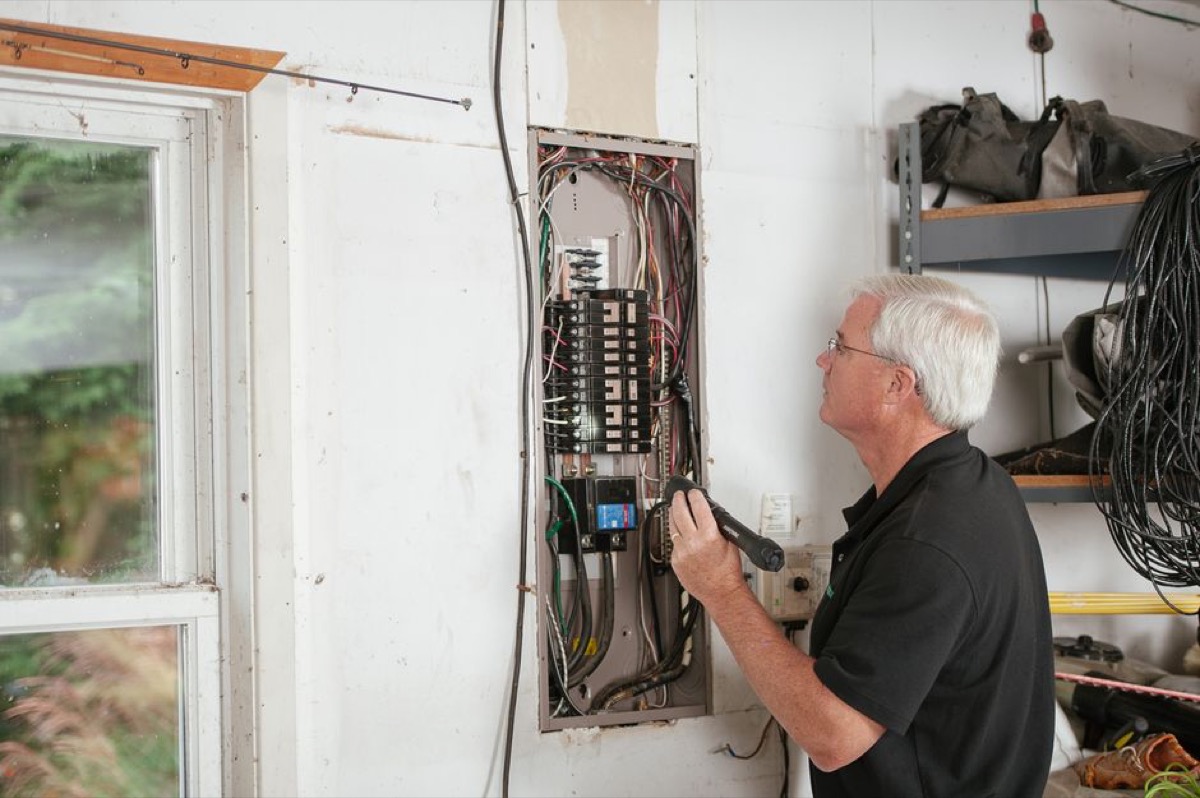
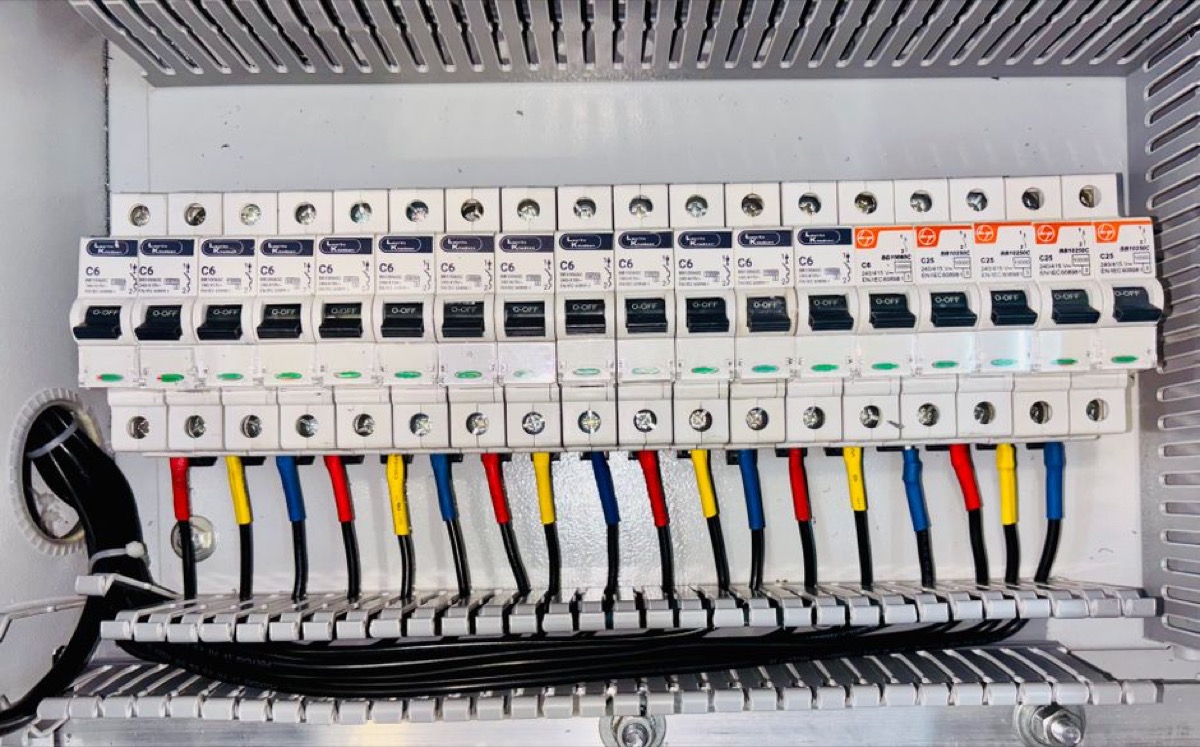
Before evaluating any unit, confirm your electrical service can handle it. A 36 kW unit draws 150 amps at full load at 240V. A 24 kW unit draws 100 amps. These are dedicated circuits - they cannot share breakers with other loads.
| Unit | kW | Full-Load Amps | Breakers Required | Wire Gauge | Min Panel Size |
|---|---|---|---|---|---|
| Stiebel Eltron Tempra 36 Plus | 36 kW | 150A | 3 x 50A double-pole | 6 AWG copper | 200A service |
| Rheem RTEX-36 | 36 kW | 150A | 4 x 40A double-pole | 8 AWG copper | 200A service |
| EcoSmart ECO 36 | 36 kW | 150A | 4 x 40A double-pole | 8 AWG copper | 200A service |
| Rheem RTEX-24 | 24 kW | 100A | 3 x 40A double-pole | 8 AWG copper | 200A service (some 150A OK) |
A 200-amp service panel is the minimum for any 36 kW unit - but "200-amp panel" does not automatically mean you have 150 amps available. Add up your current major loads: HVAC (typically 30-60A), electric range (50A), electric dryer (30A), EV charger if installed (32-48A). What remains is your usable headroom. In many homes, a full panel audit reveals that a sub-panel or service upgrade is needed before a 36 kW water heater can be added safely.
The Rheem RTEX-24 is meaningfully lighter on panel demand. At 100 amps dedicated, it fits more existing 200-amp panels without requiring a service upgrade, and in some cases fits a 150-amp service panel with careful load management.
The Four Best 240V Whole-House Electric Tankless Units in 2026
1. Stiebel Eltron Tempra 36 Plus - Best Overall
The Stiebel Eltron Tempra 36 Plus is the best whole-house electric tankless water heater for most homeowners because of one feature no other unit in this class offers: Advanced Flow Control.
When hot water demand exceeds the heater's heating capacity - which happens in cold climates, during simultaneous fixture use, or when groundwater is colder than expected - the Tempra 36 Plus reduces water pressure slightly to keep the outlet temperature at your set point. The result is slightly lower flow, but consistently hot water. Every other 36 kW unit simply delivers lukewarm water when pushed past its capacity limit.
Specs at a glance:
- Power: 36 kW
- Max flow (warm climate, 70 degrees F inlet): 7.0 GPM
- Temperature control: Digital, integrated display, 86-140 degrees F range
- Connections: 3/4" NPT
- Dimensions: 14.2"W x 16.9"H x 4.1"D
- Weight: 12.8 lbs
- Warranty: 7 years parts and labor on unit, 7 years on heat exchanger
- Breakers: 3 x 50A double-pole, 6 AWG copper wire
At around $769, the Tempra 36 Plus is priced about the same as the Rheem RTEX-36 and roughly $200 more than the EcoSmart ECO 36. That premium over the EcoSmart buys Advanced Flow Control and Stiebel's 7-year warranty - three to five years longer than Rheem's 5-year parts coverage and the EcoSmart ECO 36's lifetime-limited-warranty (which covers parts but not labor after year one). For a cold-climate household, Advanced Flow Control is not a luxury - it is the difference between a functional whole-house heater and an expensive disappointment on a January morning.
2. Rheem RTEX-36 - Best Value at 36 kW
The Rheem RTEX-36 delivers the highest peak GPM of any unit in this comparison at warm-climate inlet temperatures - up to 8.8 GPM - at a price roughly on par with the Stiebel. For warm-climate buyers prioritizing peak flow and Rheem's service network, that makes it a strong pick at the 36 kW tier.
The external digital thermostatic controller adjusts output in 1-degree increments, the same precision as Stiebel. Rheem's self-modulating technology reduces power draw when demand is low, which cuts standby energy use. The heat exchanger is copper, connections are 3/4" NPT bottom-entry, and the unit is compact enough to fit most utility closets.
The gap versus the Stiebel: no Advanced Flow Control. When you push the RTEX-36 past its heating capacity in cold weather, it delivers water at whatever temperature it can achieve - which may be 95-100 degrees F during peak demand instead of 120 degrees F. In Florida or Texas this almost never matters. In Wisconsin in February, it is a legitimate limitation.
The Rheem also uses four 40A double-pole breakers rather than Stiebel's three 50A configuration. Four smaller breakers spread across a panel can be easier to accommodate in some existing service panels than three large ones.
3. EcoSmart ECO 36 - Best Price, Warm Climates
The EcoSmart ECO 36 at roughly $561 undercuts both the Rheem RTEX-36 and Stiebel Tempra 36 Plus by about $200 while matching their 36 kW output and delivering up to 8.7 GPM in warm climates. It carries a lifetime limited warranty - the most generous coverage at this power level.
The ECO 36 is made in the USA, uses a copper heat exchanger, and features digital temperature control in 1-degree increments. Self-modulating technology adjusts output based on actual demand, avoiding the waste of heating water you do not need.
The electrical requirement is identical to the Rheem RTEX-36: four 40A double-pole breakers and 150 amps of dedicated service. There is no savings on the electrical installation side. The $200-350 savings versus Rheem and Stiebel alternatives is entirely in the unit cost.
The limitation is the same as the Rheem: no Advanced Flow Control. For buyers in warm climates where groundwater consistently enters above 65 degrees F, this does not matter - the unit will handle whole-home demand without temperature drops. For cold-climate buyers, the Stiebel's temperature management justifies its higher price.
4. Rheem RTEX-24 - Right-Sized for Moderate Climates
The Rheem RTEX-24 at 24 kW is the practical choice for 2-bathroom homes in moderate climates where groundwater stays above 55 degrees F year-round. At around $519, it delivers 5.9 GPM in warm conditions and requires only three 40A breakers instead of four - roughly 100 amps of dedicated service rather than 150 amps.
That lighter panel requirement is the RTEX-24's main advantage. In many 200-amp homes, fitting 150 amps of dedicated water heater service on top of existing loads requires either a panel upgrade or creative load management. The RTEX-24 avoids that problem. Electrical installation costs typically run $300-600 less than a 36 kW installation because fewer wire runs are needed.
The trade-off is capacity. At 24 kW, the RTEX-24 delivers:
- 70 degrees F inlet: ~5.9 GPM (two showers, comfortable margin)
- 60 degrees F inlet: ~4.7 GPM (two showers at moderate flow)
- 50 degrees F inlet: ~3.5 GPM (one shower plus one faucet)
- 40 degrees F inlet: ~2.8 GPM (marginal for a single shower)
For a 2-bath home in Georgia, Tennessee, the Pacific Coast, or similar moderate climates, the RTEX-24 is sufficient. In New England, the Great Lakes region, or mountain states during winter, step up to a 36 kW unit or consider gas tankless.
Climate Zone Buying Guide
| Climate Zone | Groundwater (Winter) | Best Pick | Notes |
|---|---|---|---|
| Gulf Coast, South Florida, Southern CA | 65-75 degrees F | EcoSmart ECO 36 | Max GPM, lowest cost, lifetime warranty |
| Southeast, Texas, Pacific Coast | 55-65 degrees F | Rheem RTEX-36 or Stiebel 36 Plus | Rheem wins on price; Stiebel if budget allows |
| Mid-Atlantic, Pacific NW, Mountain (mild) | 50-60 degrees F | Stiebel Eltron Tempra 36 Plus | Advanced Flow Control prevents lukewarm delivery |
| New England, Midwest, Great Lakes | 40-50 degrees F | Stiebel Eltron Tempra 36 Plus | Will still limit to 1-2 fixtures simultaneously in winter |
| Northern Plains, Mountain (cold) | Below 40 degrees F | Gas tankless or heat pump | Electric tankless is not a reliable whole-home solution |
| 2-bath home, warm or moderate climate | 55+ degrees F | Rheem RTEX-24 | Saves $200-400 on panel installation; fits more existing panels |
How to Choose: Decision Framework
Run through these four questions before placing an order:
- What is your winter groundwater temperature? If it drops below 50 degrees F, electric tankless will struggle to serve a whole home. Gas tankless or a heat pump water heater is more appropriate. See our cold climate tankless guide for gas options.
- What does your electrical panel look like? Have a licensed electrician confirm you have headroom for 100-150 amps of dedicated service before purchasing. A panel upgrade runs $1,500-4,000 and can shift the financial comparison versus gas tankless significantly.
- How many bathrooms and simultaneous users? One to two bathrooms with non-simultaneous peak use: RTEX-24 in moderate climates. Two to three bathrooms with occasional simultaneous use: RTEX-36 or Tempra 36 Plus. Three or more bathrooms with regular simultaneous use in a cold climate: gas tankless.
- Is cold-water temperature consistency a priority? If you want guaranteed hot water temperature even during peak demand, the Stiebel Eltron Tempra 36 Plus is the only electric unit that delivers it through Advanced Flow Control. Every other option trades temperature stability for higher peak flow.
Who Should NOT Choose Electric Tankless
Electric tankless is the wrong choice in several common situations that salespeople do not always flag:
- Cold climate, large home: A 36 kW unit maxes out at around 4 GPM in a northern winter. A 199,000 BTU condensing gas tankless delivers 10-11 GPM regardless of groundwater temperature.
- Undersized panel: If a service upgrade to 200A costs $2,000-4,000, a gas tankless (which requires a gas line but no electrical upgrade) may cost less total installed.
- High simultaneous demand: Four bathrooms, a dishwasher, and a washing machine running concurrently is beyond what any residential electric tankless handles. Gas tankless is the correct technology for high-demand households.
- On-demand hot water expectation: Electric tankless still has 3-8 seconds of cold water in the pipes before hot water arrives at a distant fixture. If zero-wait hot water is the goal, a gas tankless with built-in recirculation - like the Rinnai REP series - solves the problem that electric units cannot.
5-Year Cost of Ownership
| Cost Item | Stiebel Tempra 36 Plus | Rheem RTEX-36 | EcoSmart ECO 36 | Rheem RTEX-24 |
|---|---|---|---|---|
| Unit cost (approx.) | $769 | $770 | $561 | $519 |
| Electrical install (typical) | $600-1,200 | $600-1,200 | $600-1,200 | $400-900 |
| Annual energy cost (avg. 4-person household) | $320-480 | $320-480 | $320-480 | $280-400 |
| 5-year operating cost | $1,600-2,400 | $1,600-2,400 | $1,600-2,400 | $1,400-2,000 |
| Warranty (parts) | 7 years | 5 years | Lifetime (parts) | 5 years |
| Total 5-year cost (midpoint) | ~$3,670 | ~$3,670 | ~$3,460 | ~$2,870 |
All four units run at approximately 98-99% efficiency, so operating costs are nearly identical per kW-hour of output. The differences come from unit price, electrical installation, and whether a panel upgrade is needed. The EcoSmart ECO 36 has the lowest unit cost, but its electrical installation requirements are identical to the Rheem RTEX-36. The Rheem RTEX-24 typically has the lowest total installed cost because it fits more existing panels without an upgrade.
For comparison: a gas condensing tankless (Rinnai RU199iN, around $1,879 unit cost plus $500-1,500 installation) runs $250-400 per year in fuel costs at typical natural gas rates - similar to electric in many regions. The gas unit handles more simultaneous demand. See our hybrid vs tankless cost breakdown for the full 10-year math across fuel types.
The 2026 Verdict
Electric tankless is a legitimate whole-home water heating solution in the right conditions. Those conditions are: warm or moderate climate (groundwater above 55 degrees F in winter), a 200-amp panel with adequate headroom, and a household that does not routinely run three high-demand fixtures simultaneously.
In those conditions:
- Warm climate, price priority: EcoSmart ECO 36 at $561 with a lifetime warranty is hard to beat.
- Warm climate, brand reliability preference: Rheem RTEX-36 at $770 for Rheem's service network and highest peak GPM.
- Moderate to cold climate, or inconsistent demand patterns: Stiebel Eltron Tempra 36 Plus at $769 for Advanced Flow Control - the one feature that prevents cold-water surprises when the unit is pushed near its limits.
- 2-bath home in moderate climate, panel upgrade not viable: Rheem RTEX-24 at $519 is the right-sized choice with the lightest electrical footprint.
Related Guides
- Best Tankless Water Heaters for Cold Climates
- Best Tankless with Built-In Recirculation Pump 2026
- Hybrid Heat Pump vs Tankless: 10-Year Cost Comparison
- EcoSmart ECO 36 Full Review
Frequently Asked Questions
What is the best whole-house electric tankless water heater in 2026?
The Stiebel Eltron Tempra 36 Plus is the best whole-house electric tankless water heater for most homes in 2026. Its Advanced Flow Control reduces water flow when demand exceeds heating capacity rather than delivering lukewarm water, which makes it reliable across moderate and cold climates. At 36 kW, it delivers up to 7 GPM in warm climates and serves 2-3 simultaneous fixtures in most of the continental US. The Rheem RTEX-36 is the better pick for the largest homes or warmest climates where raw GPM output and lower cost are the priority.
Can an electric tankless water heater heat a whole house?
Yes, but only in specific conditions. A 36 kW electric tankless unit delivers 6-8 GPM in warm climates where groundwater enters at 65-70 degrees F. In cold climates where groundwater enters at 40-50 degrees F, that same unit may deliver only 3-5 GPM - enough for one shower but not simultaneous fixtures. Whole-house electric tankless works reliably in the South, Southwest, and Pacific Coast. In northern states and cold mountain regions, you need to size up or accept reduced simultaneous fixture capacity in winter.
What electrical panel size do I need for a 36 kW electric tankless water heater?
A 36 kW electric tankless water heater draws 150 amps at full load at 240V, requiring 3-4 dedicated double-pole breakers and matching wire runs. A 200-amp service panel is the minimum, and you need to verify how much headroom remains after accounting for HVAC, electric range, and other major circuits. Many older homes with 150-amp or 100-amp service require a panel upgrade before installing a 36 kW unit. The Rheem RTEX-24 at 24 kW is lighter - it needs roughly 100 amps of dedicated service, which fits more existing panels.
Stiebel Eltron Tempra 36 Plus vs Rheem RTEX-36: which is better?
For most homeowners, the Stiebel Eltron Tempra 36 Plus is better because Advanced Flow Control keeps water at your set temperature by reducing flow, rather than delivering lukewarm water when demand spikes. The Rheem RTEX-36 delivers slightly higher peak GPM in warm climates but has no equivalent flow throttling - in a cold climate with a high-demand fixture, it can produce cold-water surprises. The Stiebel typically costs $150-350 more than the Rheem. If you are in a warm climate and cost is the priority, the Rheem RTEX-36 wins on value.
Is the EcoSmart ECO 36 worth buying?
The EcoSmart ECO 36 is worth buying for warm-climate homes where inlet water stays above 65 degrees F year-round. At roughly $561, it undercuts the Stiebel Eltron Tempra 36 Plus and Rheem RTEX-36 by about $200 while carrying a lifetime limited warranty. The catch: it requires four 40A double-pole breakers and 150 amps of dedicated service - identical to the other 36 kW units. If your panel can handle it, the EcoSmart ECO 36 delivers the best cost-per-GPM of any 36 kW unit in warm climates.
What is the difference between the Rheem RTEX-24 and RTEX-36?
The Rheem RTEX-24 is 24 kW and delivers up to 5.9 GPM in warm climates; the RTEX-36 is 36 kW and delivers up to 8.8 GPM. The RTEX-24 needs about 100 amps of dedicated 240V service (three 40A breakers), while the RTEX-36 requires 150 amps (four 40A breakers). For a 2-bathroom home in a moderate climate, the RTEX-24 is usually sufficient and costs less to install. The RTEX-36 is worth the larger electrical footprint only if you are in a cold climate, have 3 or more bathrooms, or regularly run multiple high-demand fixtures simultaneously.
Should I choose electric tankless or gas tankless for a whole house?
Gas tankless wins for whole-house use in cold climates and large homes. A 199,000 BTU condensing gas tankless delivers 10-11 GPM regardless of groundwater temperature - double what the best 36 kW electric unit achieves in cold weather. Electric tankless wins where there is no gas line, in warm climates where groundwater stays above 65 degrees F, or in smaller homes with moderate demand. Electric units are cheaper to install (no venting required), near-100% efficient at the unit, and compact. Gas units have higher upfront cost but deliver more hot water on demand in challenging conditions.
Affiliate Disclosure: TanklessGeek participates in the Amazon Services LLC Associates Program, an affiliate advertising program designed to provide a means for sites to earn commissions by linking to Amazon.com. We earn commissions from qualifying purchases made through our Amazon links at no additional cost to you. These commissions support our research, testing, and content creation. We recommend products based on specifications, performance, and value, not commission rates. As an Amazon Associate I earn from qualifying purchases.
Photos provided by Pexels.