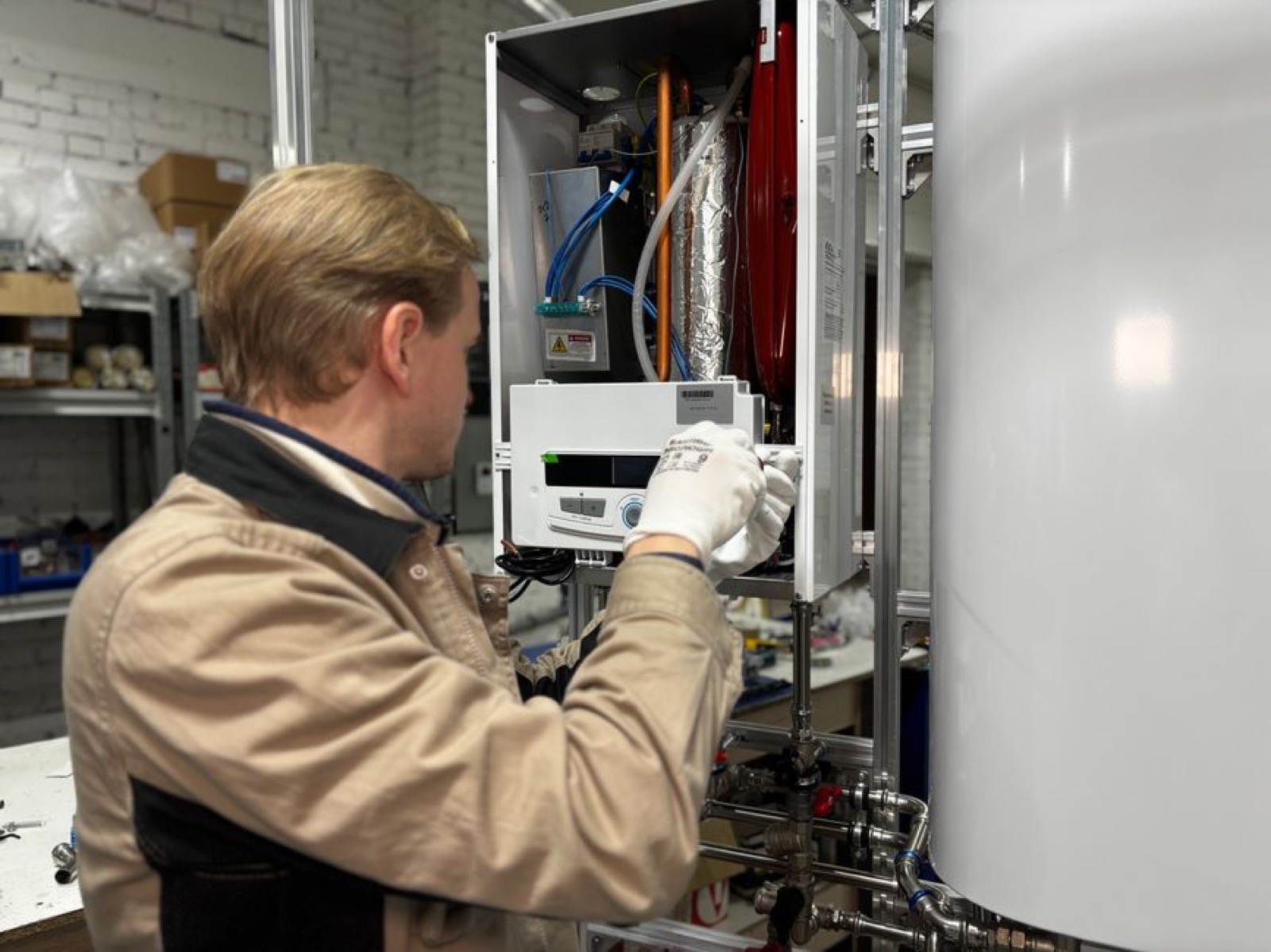
Best Tankless Water Heaters with Built-In Recirculation Pump 2026
Affiliate Disclosure: TanklessGeek participates in the Amazon Services LLC Associates Program. We earn commissions from qualifying purchases through our Amazon links at no extra cost to you. We recommend products based on specifications, performance, and value, not commission rates.
Quick Picks: Best Tankless Water Heaters with Built-In Recirculation
| Model | GPM | Fuel / Install | Best For | Price (Amazon) |
|---|---|---|---|---|
| Rinnai REP199iN | 7.9 GPM | Natural gas / Indoor | 2-3 bath homes, NG service, best overall | ~$1,440 |
| Rinnai REP160iN | 6.1 GPM | Natural gas / Indoor | 1-2 bath homes, budget-conscious NG buyers | ~$1,305 |
| Rinnai REP199iP | 7.9 GPM | Propane / Indoor | Homes on propane, rural areas without NG | ~$1,522 |
| Rinnai REP199eP | 7.9 GPM | Propane / Outdoor | Outdoor install, propane, no venting cost | ~$1,102 |
Why Recirculation Is the Most Overlooked Tankless Upgrade
A standard tankless water heater fires within 1-2 seconds of detecting flow. The problem is delivery lag: the heat exchanger produces hot water immediately, but that hot water has to travel the length of your supply lines before it reaches the fixture. In a typical 2,000 square foot home, the shower can be 60-80 feet of pipe from the water heater. At 2 GPM flow, it takes 30-40 seconds for hot water to cover that distance.
The traditional solution is a separate recirculation pump - a Grundfos, Watts, or Laing unit that runs on a timer or demand sensor, circulating a trickle of water through the hot line (and back via a dedicated return line or cold-line crossover) to keep the pipes pre-heated. These add-on systems work well. They cost $200-500 for the pump, plus $150-300 in labor, plus any crossover valve hardware. And they require a separate electrical connection, mounting point, and control wiring.
Built-in recirculation eliminates all of that external hardware. The pump lives inside the water heater cabinet. The control logic is already wired into the unit's brain. The result is simpler installation, one fewer point of failure, and - in the case of Rinnai's Smart-Circ - a learning algorithm that anticipates your schedule instead of running blind on a timer.
How Smart-Circ Works (Rinnai REP Series)
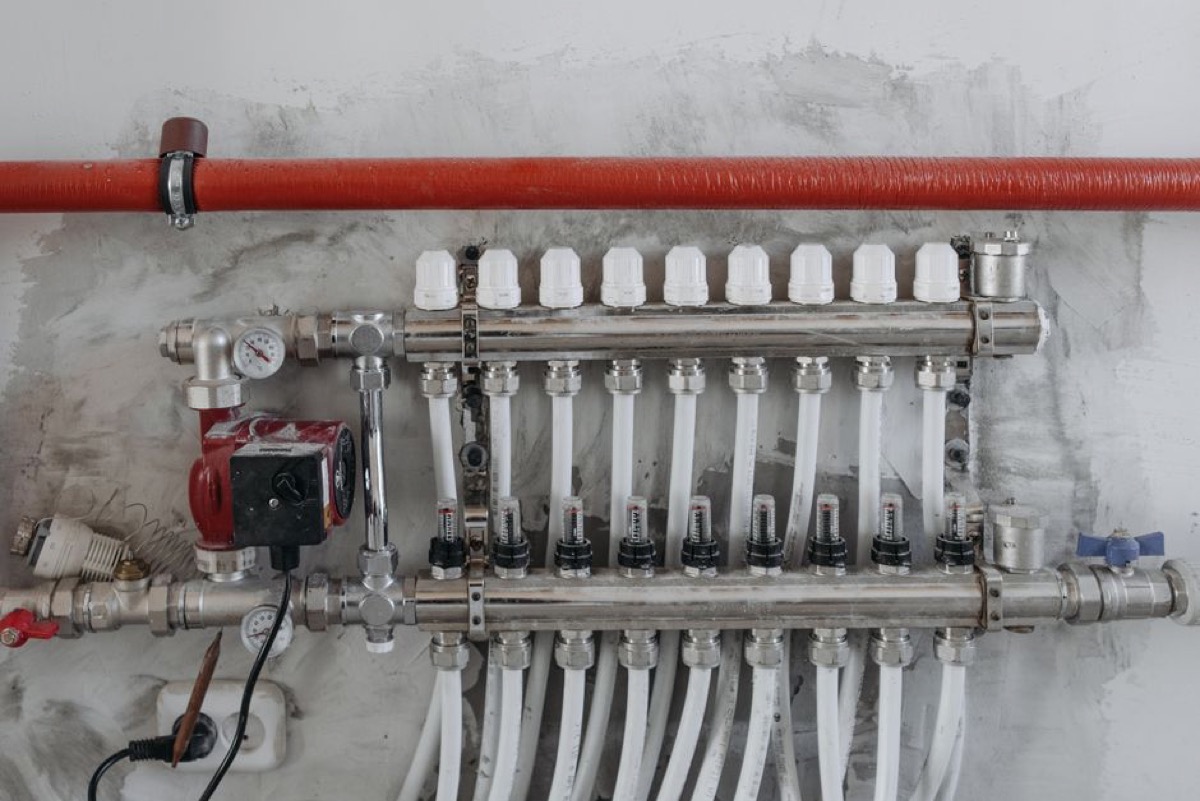
Smart-Circ is Rinnai's Intelligent Recirculation technology, exclusive to the REP model line. The system operates in two modes:
- Learning mode: The unit monitors when you draw hot water over the first few days of use. It identifies your usage patterns - 6:30 AM morning shower, noon kitchen use, 8 PM second shower - and builds a schedule automatically.
- Scheduled operation: Before each anticipated draw, the pump activates and circulates hot water through the loop. By the time you turn on the tap, the pipes are already pre-heated. The pump shuts off between scheduled periods to avoid standby waste.
Smart-Circ also supports on-demand activation via the Rinnai Control-R app (requires the Wi-Fi module, sold separately at roughly $85-100). The on-demand mode is useful for ad-hoc draws outside the learned schedule - guests staying over, a late-night workout, an unusual day.
The system works with both dedicated return lines and cold-line crossover setups. If your home has a dedicated recirculation return line (common in newer construction), connect it directly. If not, install a Rinnai thermal bypass valve at the farthest fixture, and the unit temporarily uses the cold supply line as its return path during recirculation cycles.
The one limitation to understand: REP models are non-condensing (UEF 0.82). They do not have a buffer tank. This means they solve the wait-time problem but do not address the "cold-water sandwich" - the brief lukewarm slug that appears between back-to-back short draws on tankless units. If your household makes frequent very short draws (10-second handwash bursts, quick coffee rinse), consider Navien's ComfortFlow approach below.
The Four Rinnai REP Smart-Circ Models
1. Rinnai REP199iN - Best Natural Gas Indoor Pick
The REP199iN is the natural gas indoor flagship of the REP line. At 7.9 GPM and 199,000 BTU, it handles 2-3 bathroom homes comfortably in moderate climates and 2-bathroom homes in cold climates (where groundwater temperature derate cuts output). The built-in Smart-Circ pump eliminates the add-on pump cost entirely.
Compared to the non-pump RE199iN, the REP199iN costs roughly $100-150 more at retail. A Grundfos add-on pump runs $280-350 plus labor. The math is straightforward: built-in beats add-on on total installed cost for any new installation.
Specs: 7.9 GPM (70 degree F rise), 199,000 BTU max, UEF 0.82, indoor natural gas, 14.05 x 27.28 x 10.77 in, 50 lbs, Wi-Fi capable (module sold separately), 15-year heat exchanger / 5-year parts / 1-year labor warranty.
Best for: Natural gas homes with 2-3 bathrooms in moderate to warm climates, or 2-bath homes in cold climates. The go-to for most buyers replacing a tank water heater with gas service already in place.
2. Rinnai REP160iN - Best for Smaller Homes
The REP160iN delivers 6.1 GPM at 160,000 BTU - enough for 1-2 bathroom homes where simultaneous demand rarely exceeds one shower plus a faucet. It carries the same Smart-Circ recirculation system as the 199 series, same warranty, same dimensions, and saves roughly $135 compared to the REP199iN.
The 6.1 GPM output becomes a limiting factor if you add a dishwasher, kitchen faucet, and shower at the same time in a cold climate. At a 70 degree F temperature rise, you have 6.1 GPM available. A shower at 2.0 GPM plus a kitchen faucet at 1.5 GPM plus a dishwasher filling at 1.0 GPM equals 4.5 GPM - comfortably within spec in warm months. In January in Minnesota, groundwater may be 35-40 degrees F, raising the required temperature rise to 80-85 degrees F and cutting output to roughly 4.2-4.5 GPM. Simultaneous demand then becomes tight.
If your home has two bathrooms and you run them simultaneously with any regularity, size up to the REP199iN. If you have one bathroom and a well-insulated home in a mild climate, the REP160iN is the right fit and the right price.
Specs: 6.1 GPM (70 degree F rise), 160,000 BTU max, UEF 0.82, indoor natural gas, 15-year heat exchanger / 5-year parts / 1-year labor warranty.
Best for: 1-2 bathroom homes on natural gas in moderate climates, buyers who want Smart-Circ recirculation at the lowest entry price in the REP line.
3. Rinnai REP199iP - Propane Version for Indoor Install
The REP199iP is the propane equivalent of the REP199iN - identical GPM output (7.9 GPM), identical BTU rating (199,000), identical Smart-Circ recirculation, and identical warranty. The only difference is the fuel orifice and gas valve calibrated for propane rather than natural gas. It runs at higher pressure (11-13 inches WC vs. 7-11 inches WC for natural gas) and requires a propane regulator on your tank set to the correct delivery pressure.
Propane models typically cost $75-100 more than their natural gas equivalents at retail because of slightly lower production volumes - the REP199iP at ~$1,522 vs the REP199iN at ~$1,440. In markets without natural gas distribution (rural areas, mountain properties), propane is often the only practical gas option. Propane delivers more BTU per cubic foot than natural gas, but propane unit cost per therm is typically 2-3x higher - so operating costs run higher than equivalent natural gas use. Factor that into your 10-year ownership math.
Specs: 7.9 GPM (70 degree F rise), 199,000 BTU max, UEF 0.82, indoor propane, Smart-Circ recirculation pump, 15-year heat exchanger / 5-year parts / 1-year labor warranty.
Best for: Rural homes and off-grid properties on propane that need whole-home hot water with built-in recirculation, no natural gas alternative available.
4. Rinnai REP199eP - Outdoor Propane, No Venting Required
The REP199eP is the outdoor-rated propane model in the REP line, and at ~$1,102 it is also the lowest-cost entry point into REP Smart-Circ recirculation. Outdoor installation eliminates the venting requirement entirely - no Category III stainless flue pipe, no combustion air ducting, no penetrations through walls or ceiling. For older homes where indoor venting would require major structural work, outdoor installation can save $500-1,500 in installation labor and materials.
The outdoor rating covers weather exposure but not freeze protection below the unit's minimum operating temperature. Rinnai REP outdoor models include a built-in freeze protection system that activates the burner and pump when ambient temperature drops near freezing, protecting down to approximately 0 degrees F (-18 degrees C) at minimum gas supply. Below that, or during extended power outages, the unit needs to be winterized by draining and blowing out the water circuit. If your outdoor installation site is in a region with sustained sub-zero temperatures, this is a real consideration.
Because it runs on propane (no natural gas alternative in the 'e' outdoor line as of 2026), it shares the higher operating cost profile of the REP199iP. But for remote properties where outdoor installation plus propane is the practical path, the REP199eP delivers full Smart-Circ recirculation capability at the lowest price in the lineup.
Specs: 7.9 GPM (70 degree F rise), 199,000 BTU max, UEF 0.82, outdoor propane, Smart-Circ recirculation pump, freeze protection to 0 degrees F, 15-year heat exchanger / 5-year parts / 1-year labor warranty.
Best for: Rural/off-grid homes on propane where outdoor installation saves venting cost, properties in mild-to-moderate freeze climates.
Navien NPE-A2 ComfortFlow: The Main Alternative
The Rinnai REP series is not sold directly on Amazon in the condensing tier - Rinnai's condensing recirculation models (RXP series) are typically contractor-supply only. For buyers comparing on Amazon, the practical condensing alternative with built-in recirculation is the Navien NPE-A2 series (NPE-180A2, NPE-210A2, NPE-240A2).
Navien's ComfortFlow system adds a 0.5-gallon buffer tank inside the cabinet alongside the recirculation pump. This buffer tank is the feature that matters most for frequent short-draw households. On a standard tankless unit (including the Rinnai REP), if you draw hot water briefly - say 15 seconds to rinse a dish - the unit fires, heats a small amount of water, and shuts off. Fifteen seconds later, the pipes cool, and the next short draw gets a lukewarm slug of cooling water before hot returns. This is called the cold-water sandwich, and no amount of recirculation loop scheduling fully eliminates it.
Navien's 0.5-gallon buffer tank stores a small volume of hot water inside the unit. Between short draws, the buffer provides immediate hot delivery without requiring the burner to fire. The result is consistent hot water on back-to-back short draws that no recirculation-only system without a buffer can match.
| Feature | Rinnai REP199iN | Navien NPE-240A2 |
|---|---|---|
| Max GPM (70F rise) | 7.9 GPM | 11.2 GPM |
| BTU Input | 199,000 | 199,000 |
| UEF Rating | 0.82 (non-condensing) | 0.97 (condensing) |
| Recirculation | Smart-Circ built-in pump (learns schedule) | ComfortFlow built-in pump + buffer tank |
| Cold-water sandwich fix | No (no buffer tank) | Yes (0.5-gallon buffer tank) |
| Amazon Price (approx) | ~$1,440 | ~$1,800-2,200 |
| Heat Exchanger Warranty | 15 years | 15 years |
| Condensing | No (Category III vent) | Yes (PVC vent) |
The Navien NPE-240A2's 0.97 UEF versus the REP199iN's 0.82 UEF means roughly 15 percentage points of efficiency difference. On an average US household using 60-80 therms per year for water heating, that translates to $30-60 in annual gas savings at 2026 natural gas prices - a payback of 6-10 years on the price premium, before accounting for installation labor differences.
Navien's condensing design also uses PVC for flue venting rather than the Category III stainless steel required for the non-condensing Rinnai REP. PVC is significantly cheaper to run through walls and ceilings - often $300-600 less in material and labor on a complete installation. This can partially or fully offset the higher unit cost of the Navien NPE-A2 on a total-installed-cost basis.
Choose Rinnai REP when: You are on a consistent daily schedule, your household makes longer single draws rather than frequent short ones, you want the lowest entry price for built-in recirculation, or you are on propane where the REP outdoor model saves venting cost.
Choose Navien NPE-A2 when: Your household makes frequent short draws (handwashing, coffee, rinsing), you want higher efficiency (0.97 UEF), you are replacing a condensing unit and already have PVC vent runs in place, or you need higher GPM output for 3-4 bathroom demand.
Built-In vs Add-On: Is It Worth Paying More?
The question most buyers ask is whether the built-in pump premium is worth it versus buying a non-pump Rinnai RE model and adding a Grundfos or Watts pump separately. The math depends on your situation:
| Approach | Unit Cost | Add-On Pump Cost | Labor Delta | Total Delta |
|---|---|---|---|---|
| Rinnai REP199iN (built-in) | ~$1,440 | $0 | Baseline | Baseline |
| Rinnai RE199iN + Grundfos UP15-10SU | ~$1,060 | ~$310 | +$150-250 | +$20-120 more |
| Rinnai RE199iN + Watts Premier 500800 | ~$1,060 | ~$190 | +$150-250 | -$40-60 less (marginal) |
On paper, the Watts Premier add-on path is $40-60 cheaper on total installed cost. In practice, the built-in pump wins on two dimensions that the table does not capture: Smart-Circ's learning algorithm versus a dumb timer, and zero add-on pump failure risk over the unit's 15-year life. External pumps typically carry 1-3 year warranties. A Grundfos UP15-10SU failing at year 7 is a $310 pump plus $150 in service labor - at that point the built-in path clearly wins on lifetime cost.
Installation Requirements: What to Confirm Before You Buy
- Gas line capacity: REP199 models require a 3/4-inch gas line capable of delivering 199,000 BTU/h. Many homes upgrading from a 40,000-50,000 BTU tank heater have a 1/2-inch gas line that will need to be upsized. Get a plumber to assess the existing line before ordering the unit.
- Venting (indoor models): REP indoor models are non-condensing and require Category III stainless steel venting - not PVC, not B-vent. Category III runs roughly $15-25 per foot for double-wall material. A 20-foot vertical run with elbows can add $400-600 to the install.
- Electrical: REP models require a 120V outlet within 5 feet of the unit for the electronics and pump. Most existing water heater locations already have a 120V circuit nearby.
- Recirculation loop: If your home does not have a dedicated return line, purchase a Rinnai Thermal Bypass Valve (sold separately) and install it at the farthest hot water fixture. Your plumber can complete this in 30-60 minutes as part of the installation.
- Wi-Fi module (optional): Smart-Circ's full scheduling and on-demand app control requires the Rinnai Control-R Wi-Fi module, sold separately. Without it, the unit still runs Smart-Circ pattern-learning in local mode, but you cannot adjust the schedule or trigger on-demand activation from your phone.
Frequently Asked Questions
What is a built-in recirculation pump on a tankless water heater?
A built-in recirculation pump is an integrated pump inside the tankless unit that continuously or periodically circulates hot water through your pipes so hot water arrives at faucets within seconds instead of 30-60 seconds. Units like the Rinnai REP series (Smart-Circ) and Navien NPE-A2 (ComfortFlow) include this pump in the cabinet - no separate pump purchase or installation required.
Do I need a dedicated return line for a built-in recirculation pump?
No. Both Rinnai REP (Smart-Circ) and Navien NPE-A2 (ComfortFlow) can operate without a dedicated return line by using the cold water supply line as a return path through a crossover (bypass) valve installed at the farthest fixture. A dedicated return line is faster and more efficient if you already have one, but it is not required.
How much water does built-in recirculation actually save?
Rinnai cites 4,000+ gallons per year saved in a typical household by eliminating the cold-water flush before hot water arrives. The exact figure depends on pipe length, household size, and how often fixtures are used. Longer pipe runs - common in larger homes - see the greatest savings because there is more cold water sitting in the lines between draws.
What is Smart-Circ on a Rinnai tankless water heater?
Smart-Circ is Rinnai's Intelligent Recirculation technology. The unit monitors your hot water usage patterns over time and automatically schedules the recirculation pump to pre-heat pipes before your typical draw times. Smart-Circ requires the Wi-Fi control module (sold separately) for scheduling and on-demand activation via app. Without the module, the unit still runs pattern-learning in local mode.
What is ComfortFlow on a Navien NPE-A2?
ComfortFlow is Navien's combined built-in buffer tank plus recirculation pump system on the NPE-A2 series. The 0.5-gallon buffer tank eliminates the cold-water sandwich effect on short back-to-back draws, while the integrated pump circulates hot water through the system. ComfortFlow includes HotButton demand activation and supports both dedicated return line and cold-line crossover operation.
Rinnai REP vs Navien NPE-A2: which has better built-in recirculation?
Navien NPE-A2 has a hardware advantage: the 0.5-gallon ComfortFlow buffer tank eliminates the cold-water sandwich that Rinnai REP cannot address without a buffer. Rinnai REP Smart-Circ has a pattern-learning advantage: it anticipates your schedule and pre-heats pipes before you ask. For households with frequent short draws, Navien's buffer tank is the more noticeable upgrade. For households with consistent daily schedules, Rinnai's learning algorithm eliminates wait time with less standby energy use.
Can I add a recirculation pump to a tankless water heater that does not have one built in?
Yes. External recirculation pumps (Grundfos UP15-10SU, Watts Premier 500800, Laing Autocirc) can be added to any recirculation-capable tankless unit. Expect $200-500 for the pump plus $150-300 in labor. The result is functionally similar to a built-in pump, though it requires a separate electrical connection and timer or demand control, and external pumps carry shorter warranties than the unit itself.
The 2026 Verdict
For most natural gas homes replacing a tank heater with 2-3 bathrooms, the Rinnai REP199iN is the strongest all-around pick: 7.9 GPM, Smart-Circ recirculation that learns your schedule, and a 15-year heat exchanger warranty at a price that beats add-on pump alternatives on total lifetime cost. For smaller 1-2 bath homes, the Rinnai REP160iN delivers identical recirculation technology at 6.1 GPM and a lower entry price.
Propane homes have two REP paths: the REP199iP for indoor installation with full venting, and the REP199eP for outdoor installation that skips venting cost entirely - useful when indoor venting would require significant structural work on an older home.
If your household makes frequent short back-to-back draws, or if you want condensing efficiency and can absorb the higher unit cost, Navien's NPE-A2 ComfortFlow is worth the premium. But for the majority of homeowners who want built-in recirculation, reliable hot water within seconds, and a well-supported brand on Amazon, the Rinnai REP199iN is the right call in 2026.
For more context on recirculation planning, see our tankless no-hot-water troubleshooting guide, our retrofit cost breakdown for older homes, and our condensing vs non-condensing efficiency comparison.
Affiliate Disclosure: As an Amazon Associate I earn from qualifying purchases. TanklessGeek participates in the Amazon Services LLC Associates Program, an affiliate advertising program designed to provide a means for sites to earn commissions by linking to Amazon.com. We earn commissions from qualifying purchases made through our Amazon links at no additional cost to you. These commissions support our research, testing, and content creation. We recommend products based on specifications, performance, and value, not commission rates.