Federal Tax Credit for Tankless Water Heaters 2026: How to Claim 2025 Installs

Affiliate Disclosure: TanklessGeek participates in the Amazon Services LLC Associates Program. We earn commissions from qualifying purchases through our Amazon links at no extra cost to you. We recommend products based on specifications, performance, and value, not commission rates.
The federal tax credit for tankless water heaters was one of the best incentives in the Inflation Reduction Act, offering homeowners 30% back on qualifying equipment up to a $600 cap. But if you're planning a 2026 installation, we have bad news: the credit ended on December 31, 2025.
The One Big Beautiful Bill Act, signed July 4, 2025, terminated the Energy Efficient Home Improvement Credit (Section 25C) early. No federal tax credit is available for tankless water heaters placed in service on or after January 1, 2026.
If you installed your tankless water heater in 2025, you can still claim the credit on your 2025 tax return. And if you're planning a 2026 install, utility and state rebates can still save you $80 to $1,300, depending on where you live and which unit you choose.
How to Claim the Federal Tax Credit for 2025 Installs
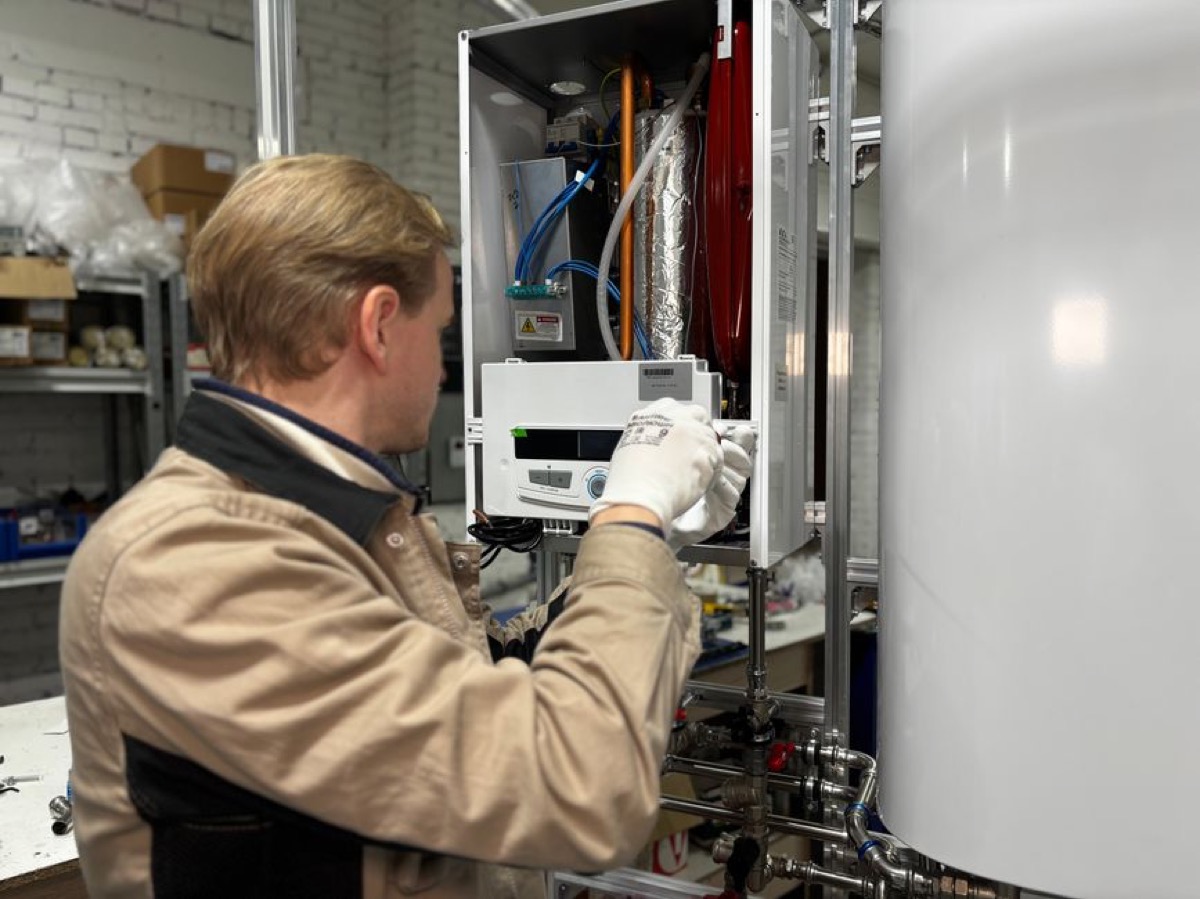
If your tankless water heater was placed in service on or before December 31, 2025, you're still eligible for the credit. Here's how to claim it.
Step 1: Confirm Your Unit Qualified
Gas tankless water heaters had to meet two requirements:
- ENERGY STAR certification with a Uniform Energy Factor (UEF) of 0.95 or higher
- Produced by an IRS-registered qualified manufacturer with a valid QMID (Qualified Manufacturer Identification Number)
Most condensing tankless models from Rinnai, Navien, Noritz, and Rheem met the UEF threshold. Electric tankless units generally did not qualify unless they were heat pump water heaters (a separate category with a $2,000 cap).
If you're not sure whether your unit qualified, check the manufacturer's website for a tax credit certification statement and QMID. Rinnai, for example, published a list of qualifying models with QMIDs on their tax credit page.
Step 2: Gather Your Documentation
You'll need:
- Receipt showing the total installed cost (equipment + labor)
- Manufacturer's certification statement with the QMID
- Proof of installation date (invoice with date of service, not purchase date)
The IRS requires the installation date, not the purchase date. If you bought the unit in December 2025 but it wasn't installed until January 2026, it does not qualify.
Step 3: File IRS Form 5695 with Your 2025 Tax Return
The credit is claimed on IRS Form 5695, Part II: Energy Efficient Home Improvement Credit. You'll enter:
- Line 22a: The total installed cost of the tankless water heater (equipment + labor)
- Line 22b: The manufacturer's QMID
- Line 23: The credit amount (30% of cost, up to $600 for tankless units)
The credit is nonrefundable, meaning it can reduce your tax liability to zero but you won't get a refund for any unused portion. If your total tax liability for 2025 is less than $600, you won't capture the full credit value.
Any rebates you received from your utility or state program reduce your eligible cost basis. For example, if the total installed cost was $2,000 and you received a $400 utility rebate, your eligible basis is $1,600. The 30% credit on $1,600 is $480.
Step 4: Keep Records for Three Years
The IRS recommends keeping your receipt, manufacturer's certification, and a copy of Form 5695 for at least three years after you file. If the IRS audits your return, you'll need to provide proof that the unit qualified and was placed in service by December 31, 2025.
What Equipment Qualified for the Credit?
Tax Credit Qualified Models (2025 Installs Only)
These models met the ENERGY STAR and UEF ≥ 0.95 requirements for the federal credit. They're still excellent purchases in 2026 and may qualify for utility rebates.
| Model | UEF | GPM | Best Use | Price Range | Link |
|---|---|---|---|---|---|
| Rinnai RU199iN | 0.95+ | 11 | Whole-home, cold climate | $1,100–$1,300 | View on Amazon |
| Rinnai RX199iN | 0.98 | 11.1 | Indoor/outdoor convertible | $1,500–$1,700 | |
| Rinnai RXP199iN | 0.98 | 11 | Outdoor propane | $1,600–$1,800 |
All three models are ENERGY STAR certified and met the 2025 federal credit requirements.
2026 Alternative: Utility and State Rebates
With the federal credit gone, utility rebates are now the primary savings pathway for 2026 tankless installations. These rebates are funded by gas utilities under demand-side management (DSM) programs and are independent of federal law.
How Much Can You Save?
Rebates vary by utility and by the unit's UEF rating. Here's what we confirmed live in July 2026:
- SoCalGas (California): $80 to $1,300, tiered by UEF. Units with UEF 0.98+ qualify for the $1,300 tier. Replaces a storage water heater only.
- Energy Trust of Oregon (NW Natural, Cascade, Avista): $400 flat rebate for ENERGY STAR certified tankless units.
- Most other utility programs: $100 to $500, depending on UEF and whether the unit replaces a storage tank.
To find rebates in your area, visit DSIRE.org (Database of State Incentives for Renewables and Efficiency), enter your ZIP code, and filter for water heating. You can also call your gas utility and ask for their current tankless water heater rebate program.
IRA Rebate Programs (HEAR / HOMES)
The Inflation Reduction Act funded two state-administered rebate programs that remain active in 2026:
- HEAR (Home Electrification and Appliance Rebates): Up to $1,750 for heat pump water heaters (not gas tankless) for income-qualified households. Available only in states with active programs.
- HOMES (Home Efficiency Rebates): Whole-home efficiency rebates (up to $8,000) that can include water heating upgrades as part of a comprehensive retrofit.
These programs prioritize heat pump water heaters over gas tankless units. If you're eligible and your state's program is live, switching to a heat pump water heater instead of gas tankless can unlock significantly more rebate money. But if you're committed to gas tankless, utility rebates remain your best option.
Can You Stack Rebates?
In most cases, yes. Utility rebates are independent of federal programs and can be combined with IRA rebates if you qualify. However, you cannot stack the old 25C credit with utility rebates from 2025, since the credit basis had to be reduced by any rebates received.
For 2026, there's no federal credit to stack, so you keep 100% of any utility rebate you receive.
Why Did the Federal Credit End?
The Energy Efficient Home Improvement Credit (Section 25C) was originally scheduled to run through December 31, 2032 under the Inflation Reduction Act. But the One Big Beautiful Bill Act, passed in July 2025, terminated 25C (and the related Residential Clean Energy Credit, 25D) early, effective for any property placed in service after December 31, 2025.
The stated reason was deficit reduction. The 25C credit cost the federal government roughly $2.8 billion per year, and tankless water heaters were a small but measurable slice of that.
State utility rebates were not affected. These are funded by ratepayer surcharges and utility budgets, not federal tax revenue.
Should You Still Buy a Tankless Water Heater in 2026?
Absolutely. The federal credit was a nice bonus, but it wasn't the reason to buy a tankless water heater. The real value is in lower operating costs, unlimited hot water, and 20+ year lifespan.
A high-efficiency condensing tankless unit with UEF 0.95+ saves roughly $150 to $250 per year compared to a tank water heater (depending on household size and local fuel costs). Over 20 years, that's $3,000 to $5,000 in savings, which far exceeds the $600 credit you would have received in 2025.
And if you qualify for a utility rebate in the $400 to $1,300 range, the upfront cost difference between a tankless and tank water heater shrinks significantly. In California's SoCalGas territory, a $1,300 rebate on a $2,000 installed tankless unit leaves you with a $700 net cost, which is competitive with a new tank water heater installation.
Which Models Should You Buy in 2026?
The same models that qualified for the 2025 credit are still the best buys in 2026. Here's what we recommend:
Best Overall: Rinnai RU199iN
Why we recommend it: The RU199iN is Rinnai's best-selling condensing model and one of the few units that performs reliably in cold groundwater. It delivers 11 GPM at a 45°F temperature rise, which is enough for 3 simultaneous showers in most climates.
At UEF 0.95+, it qualifies for most utility rebates. It's also been on the market since 2019 and has a track record of low failure rates. Rinnai backs it with a 15-year heat exchanger warranty.
Best for Outdoor Install: Rinnai RX199iN
Why we recommend it: The RX199iN is Rinnai's newest flagship model. It can be installed indoors or outdoors with a simple vent cap swap, and it can run on natural gas or propane thanks to the Smart Sense gas control system.
At UEF 0.98, it qualifies for the highest rebate tiers from utilities like SoCalGas. It's more expensive than the RU199iN, but the flexibility is worth it if you're unsure about indoor vs. outdoor placement.
Best for Propane: Rinnai RXP199iN
Why we recommend it: If you're on propane and need an outdoor unit, the RXP199iN is purpose-built for that use case. It has the same 0.98 UEF and 11 GPM output as the RX199iN but comes pre-configured for propane and outdoor mounting.
Propane prices are higher than natural gas in most areas, so the efficiency gain from a condensing unit is even more valuable. At UEF 0.98, this unit recovers enough heat from exhaust gases to cut propane consumption by 15-20% compared to a non-condensing tankless.
How to Maximize Your Utility Rebate
Most utility rebate programs have eligibility rules. Here's how to make sure you qualify:
1. Replace a Storage Water Heater
Many programs require the tankless unit to replace an existing storage tank water heater (not a prior tankless). If you're replacing a tankless with a tankless, you may not qualify. Check your utility's program rules before you buy.
2. Buy from the Qualified Product List
Most utilities maintain a list of qualifying models. Some programs require ENERGY STAR certification; others accept any unit above a certain UEF threshold. Download the list from your utility's website before you shop.
3. Submit Before the Deadline
Utility rebate funds are first-come, first-served. Some programs exhaust their annual budget by September. If you're installing in late 2026, check whether funds are still available before you commit.
4. Keep Your Old Water Heater Receipt
Some programs require proof that you replaced a storage tank. If you're doing the install yourself, take a photo of the old tank's data plate before removal and keep the receipt showing disposal.
FAQ: Federal Tax Credit and Utility Rebates
Is there a federal tax credit for tankless water heaters in 2026?
No. The federal 25C tax credit ended December 31, 2025 under the One Big Beautiful Bill Act. Equipment placed in service after that date receives no federal tax credit.
Can I still claim the credit if I installed my tankless water heater in 2025?
Yes. If your tankless water heater was placed in service on or before December 31, 2025, you can claim the credit on your 2025 tax return using IRS Form 5695, Part II.
What was the maximum credit for a tankless water heater?
30% of the installed cost, capped at $600 for gas tankless units with UEF ≥ 0.95. Heat pump water heaters had a separate $2,000 cap.
What rebates are available for 2026 tankless installations?
Utility rebates range from $80 to $1,300 depending on your gas utility and the unit's UEF. California's SoCalGas pays up to $1,300; Oregon's Energy Trust pays $400. Check DSIRE.org for programs in your area.
Which tankless water heaters qualified for the credit?
Gas tankless water heaters with ENERGY STAR certification and UEF ≥ 0.95 qualified. The unit had to be produced by an IRS-registered manufacturer with a QMID (for 2025 installs).
Do I need to reduce my credit by any rebates I received?
Yes. If you received a utility or state rebate in 2025, your eligible cost basis for the 25C credit is reduced by the rebate amount. For example, if the total installed cost was $2,000 and you received a $400 rebate, your basis is $1,600 and the 30% credit is $480 (not $600).
Can I carry the credit forward if I don't owe enough tax?
No. The 25C credit is nonrefundable and does not carry forward. If your tax liability for 2025 is less than the credit amount, you lose the unused portion.
Does the credit apply to new construction?
No. The 25C credit applied only to existing homes. New construction qualified under a different credit (45L, New Energy Efficient Home Credit), which also ended in 2025.
The 2026 Verdict: Still Worth It
The loss of the federal credit is disappointing, but it doesn't change the core economics of tankless water heaters. High-efficiency condensing models save $150 to $250 per year in operating costs and last 20+ years, which means the payback period is still in the 5 to 7-year range even without federal incentives.
If you're in a utility territory with a strong rebate program, you can still capture $400 to $1,300 in savings upfront. And if you're replacing a tank water heater that's approaching end-of-life, the upgrade to tankless delivers better performance, better efficiency, and better reliability, regardless of tax policy.
For 2025 filers: don't leave money on the table. Claim your credit on Form 5695 if you installed before December 31, 2025. And if you're on the fence about a 2026 install, check your utility's rebate program before you decide.
Related Articles
- Condensing vs Non-Condensing Tankless Water Heaters: Efficiency & Real Cost Savings
- Best Tankless Water Heaters for Cold Climates & High Altitude
- Natural Gas vs Propane Tankless Water Heaters: Which Is Cheaper to Operate?
Affiliate Disclosure: TanklessGeek participates in the Amazon Services LLC Associates Program, an affiliate advertising program designed to provide a means for sites to earn commissions by linking to Amazon.com. We earn commissions from qualifying purchases made through our Amazon links at no additional cost to you. These commissions support our research, testing, and content creation. We recommend products based on specifications, performance, and value, not commission rates.
Photos provided by Pexels.