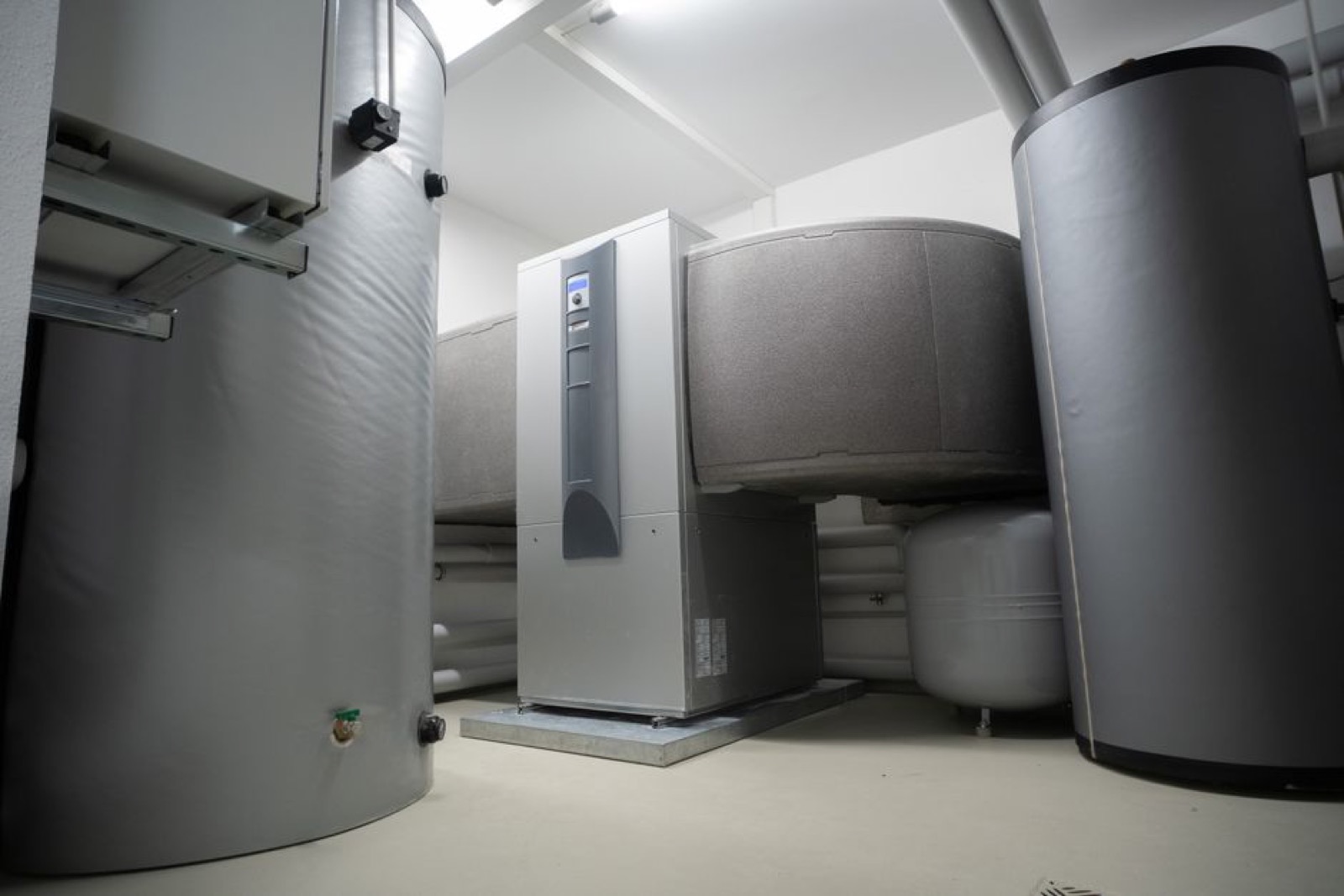
Hybrid Heat Pump vs Tankless Water Heater: Which Saves More Money?
Heat pump water heaters save $400-$600 per year compared to gas tankless models. Over a 15-year ownership period, that translates to $6,000-$9,000 in total energy savings. The upfront cost difference shrinks dramatically after federal tax credits (up to $2,000 for heat pumps, zero for tankless in 2026). This guide breaks down operating costs, installation expenses, total lifecycle ownership, and when each technology makes financial sense.
Affiliate Disclosure: TanklessGeek participates in the Amazon Services LLC Associates Program. We earn commissions from qualifying purchases through our Amazon links at no extra cost to you. We recommend products based on specifications, performance, and value, not commission rates.
Quick Picks: Best Gas Tankless Models (If You Choose Tankless)
| Model | UEF | Flow Rate | Annual Cost | Best For |
|---|---|---|---|---|
| Rinnai RU199iN | 0.96 | 11 GPM | $250-$350 | Whole-home natural gas |
| Rinnai RU199iP | 0.96 | 11 GPM | $300-$450 | Off-grid propane |
| Rinnai RXP199iN | 0.96 | 11 GPM | $250-$350 | Premium with recirculation |
Important note: Heat pump water heaters are not widely sold on Amazon and typically require professional sizing and installation. This article compares the two technologies using real operating cost data; the tankless models above are listed for readers choosing tankless over heat pump.
Annual Operating Cost Comparison: The $400 Gap
Here is the financial reality in 2026 utility rates:
| Technology | Annual Energy Cost | Annual Maintenance | Total Annual Cost |
|---|---|---|---|
| Heat Pump Water Heater | $150-$250 | $0-$50 | $150-$300 |
| Gas Tankless (Natural Gas) | $200-$350 | $100-$200 | $300-$550 |
| Propane Tankless | $300-$500 | $100-$200 | $400-$700 |
| Standard Gas Tank | $350-$550 | $0-$50 | $350-$600 |
The $400-$600 annual operating cost advantage comes from physics. Heat pump water heaters do not generate heat - they move existing heat from ambient air into the water. This process operates at 300-400% efficiency (UEF ratings of 3.0-4.0). You get 3-4 BTUs of heat for every 1 BTU of electricity consumed.
Gas tankless models, even high-efficiency condensing units, cannot exceed 96% UEF because they must burn fuel to generate heat. Every therm of natural gas burned produces at most 0.96 therms of usable water heating.
Upfront Cost: Where Tankless Wins (Before Rebates)
| Cost Factor | Heat Pump Water Heater | Gas Tankless |
|---|---|---|
| Unit Cost | $1,400-$2,800 | $600-$2,000 |
| Installation Labor | $500-$1,200 | $1,000-$3,500 |
| Total Upfront | $1,900-$4,000 | $1,600-$5,500 |
| Federal Tax Credit (2026) | 30% up to $2,000 | $0 (25C credit expired) |
| Net After Credit | $1,330-$2,800 | $1,600-$5,500 |
Before federal incentives, gas tankless models appear cheaper. But the 30% federal tax credit (up to $2,000 maximum) for heat pumps flips that calculation. In California and other states with additional utility rebates, the net cost of a heat pump water heater can drop below $1,500.
Gas tankless installation costs vary wildly depending on infrastructure. If your home already has adequate gas supply and venting, installation runs $1,000-$1,500. If the installer must upgrade the gas line from 1/2" to 3/4", add $1,000-$2,000. If the unit requires Category III stainless steel venting instead of PVC, add another $800-$1,500.
15-Year Total Cost of Ownership
This is where operating cost savings compound:
Heat Pump Water Heater:
- Upfront after tax credit: $1,500-$2,500
- 15 years operating cost @ $225/year: $3,375
- No replacement needed (typical lifespan 13-15 years)
- Total 15-year cost: $4,875-$5,875
Gas Tankless Water Heater:
- Upfront: $3,000-$5,000
- 15 years operating cost @ $425/year: $6,375
- No replacement needed (typical lifespan 20+ years)
- Total 15-year cost: $9,375-$11,375
The heat pump saves $4,500-$5,500 over 15 years. Payback occurs between years 3-7 depending on local utility rates.
When Does Tankless Make More Financial Sense?
Gas tankless models are the better financial choice in these scenarios:
1. Natural gas is cheap, electricity is expensive
In regions where natural gas costs $0.80-$1.00 per therm and electricity is $0.18-$0.22 per kWh (parts of the Midwest and Southeast), the operating cost gap narrows to $150-$250 per year. Payback stretches beyond 10 years.
2. You are moving within 5 years
If you do not plan to stay in the home long enough to recoup the higher net upfront cost, tankless offers instant endless hot water without locking in a long-term savings bet.
3. Your home has no space for a 60-gallon tank
Heat pump water heaters are physically large (24-28" diameter, 60-70" tall) and require 700-1,000 cubic feet of ambient air. If your mechanical space is a closet or tight utility room with no HVAC, tankless is the only option.
4. You live in a very cold climate and have an unheated basement
Heat pumps extract ambient heat from the surrounding air. In an unheated basement that drops to 40-45°F in winter, efficiency falls 25-35%, and the unit relies more heavily on resistance backup heating. In this scenario, a condensing gas tankless with cold-climate sizing delivers more consistent performance.
When Does a Heat Pump Make More Financial Sense?
1. You plan to stay 7+ years
Payback completes between years 3-7. Every year beyond that is pure savings. Over 15 years, the heat pump saves $4,500-$5,500 compared to gas tankless.
2. Electricity rates are moderate to low
In regions with electricity under $0.14 per kWh (Pacific Northwest, parts of the Midwest), heat pumps deliver exceptional value. Annual operating costs drop below $150.
3. Your home has adequate mechanical space and conditioned air
An insulated basement, heated garage, or conditioned utility room provides the 700+ cubic feet of ambient air and 50-90°F operating range where heat pumps thrive.
4. You want the lowest environmental impact
Heat pumps emit 60-75% less CO2 than gas tankless when powered by the average U.S. grid mix. In regions with high renewable penetration (California, Pacific Northwest, Northeast), emissions drop 80-90%.
Maintenance: Advantage Heat Pump
Gas tankless water heaters require annual descaling in hard water areas. Scale buildup on the heat exchanger reduces efficiency by 20-30% and voids warranties if not addressed. Professional descaling costs $150-$250 per year.
Heat pump water heaters require minimal maintenance: clean the air filter every 3-6 months (5-minute task) and check the condensate drain annually. No descaling. No combustion venting inspection. Total annual maintenance cost: $0-$50 if you do it yourself.
Reliability and Lifespan
Gas tankless water heaters last 20-25 years with proper maintenance. The heat exchanger is robust, and there are no storage tank corrosion concerns.
Heat pump water heaters last 13-15 years. The compressor and refrigerant system add failure points not present in tankless models. However, heat pumps typically outlast standard electric tank models (8-12 years) by 50%.
Cold Weather Performance
Heat Pump: Efficiency drops 20-35% when ambient air temperature falls below 45°F. Most models switch to resistance backup heating below 40°F, which eliminates the efficiency advantage. Solution: install in a conditioned or semi-conditioned space.
Gas Tankless: Output capacity (GPM) drops when groundwater temperature is low. A unit rated 11 GPM at 50°F groundwater may deliver only 7-8 GPM at 37°F groundwater (common in the northern U.S. in January-February). Solution: size up 25-30% in cold climates.
Frequently Asked Questions
Which is cheaper to operate: heat pump or tankless water heater?
Heat pump water heaters are substantially cheaper to operate. They cost $150-$250 per year to run, while gas tankless models cost $200-$450 per year. The difference is due to heat pumps operating at 300-400% efficiency by moving existing heat from ambient air, while tankless heaters must generate heat from fuel. Over a 15-year period, that saves $3,000-$6,000 in energy costs alone.
Are heat pump water heaters eligible for federal tax credits in 2026?
Yes. Heat pump water heaters qualify for a federal 30% tax credit up to $2,000 under the Inflation Reduction Act through 2032. This credit applies to both the unit and installation costs. Gas tankless water heaters previously qualified for a smaller $300 credit under the 25C program, but that expired at the end of 2025. Electric tankless models do not qualify for any federal credit.
Do heat pump water heaters work in cold climates?
Yes, but with reduced efficiency. Heat pumps extract ambient heat from the surrounding air. In an unheated basement at 50°F, efficiency remains high. Below 40°F ambient temperature, efficiency drops 20-30%, and most models switch to resistance backup heating elements. For optimal performance in cold climates, install the unit in a conditioned space like a utility room or insulated basement. Gas tankless models do not have this limitation but face their own cold-weather performance penalty from groundwater temperature rise demands.
How long does it take for a heat pump water heater to pay back the higher upfront cost?
After the federal tax credit, payback ranges from 3-7 years depending on local utility rates and household usage. A typical California household with high electricity rates sees payback in 3-4 years. In regions with low gas prices and moderate electricity costs, payback stretches to 6-7 years. Beyond the payback period, savings continue for the full 13-15 year lifespan of the heat pump, totaling $6,000-$9,500 in net savings over ownership.
Can I install a heat pump water heater myself?
Not recommended for most homeowners. Heat pump water heaters require 240V electrical connections, proper condensate drainage, adequate clearance for airflow, and precise refrigerant system handling. Installation typically costs $500-$1,200 when performed by a licensed plumber or HVAC technician. Improper installation voids the warranty and can result in inefficient operation, refrigerant leaks, or electrical hazards. DIY is feasible only for those with documented electrical and plumbing experience.
Do tankless water heaters really save 24-34% over traditional tanks?
Yes, but that figure compares tankless to standard tank water heaters, not to heat pumps. Gas tankless models eliminate standby heat loss (the energy spent keeping a tank of water hot 24/7), which accounts for 15-25% of total energy use in tank models. The 24-34% savings claim is accurate when replacing an old tank heater. However, when compared to heat pump water heaters, tankless models cost more to operate because heat pumps deliver 300-400% efficiency while tankless units max out at 95-96% UEF.
The 2026 Verdict: Heat Pumps Win on Lifetime Cost
If you plan to stay in your home 7+ years, have adequate mechanical space, and live in a climate with moderate electricity rates, a heat pump water heater delivers $4,500-$5,500 in net savings over 15 years compared to gas tankless. The federal tax credit (up to $2,000) closes the upfront cost gap to near-parity.
Gas tankless models remain the better choice for homes with cheap natural gas, expensive electricity, space constraints, or owners planning to move within 5 years. They also outperform heat pumps in very cold climates with unheated mechanical spaces.
For most U.S. households in 2026, the math favors heat pumps. The operating cost savings are real, measurable, and compound annually.
Related Articles
- Condensing vs Non-Condensing Tankless: Efficiency Breakdown
- Natural Gas vs Propane Tankless: Operating Cost Comparison
- Best Tankless Water Heaters for Cold Climates
- Retrofitting Tankless in Old Homes: Installation Cost Guide
Affiliate Disclosure: TanklessGeek participates in the Amazon Services LLC Associates Program, an affiliate advertising program designed to provide a means for sites to earn commissions by linking to Amazon.com. We earn commissions from qualifying purchases made through our Amazon links at no additional cost to you. These commissions support our research, testing, and content creation. We recommend products based on specifications, performance, and value, not commission rates.
Photos provided by Pexels.